
How Real Estate Creates Lasting Wealth: Your Path to Building a Family Legacy

August 22, 2025

Curated for Aspiring Real Estate Investors, Family Wealth Builders and Strategic Property Owners


If you've ever wondered how some families seem to build wealth that lasts for generations while others struggle to build a legacy, the answer often lies in real estate. While most people work for money, successful investors make money work for them through strategic real estate investments. This isn't about getting rich quick or flipping houses for TV dramatics. This is about understanding how real estate offers unique advantages that no other investment can match, and how you can use these advantages to build lasting wealth for your family.


The Unique Power of Real Estate Investment


Real estate occupies a special place in wealth building because it combines four powerful benefits that work together to accelerate your financial growth. Unlike stocks, which offer potential appreciation, or bonds, which provide income, real estate offers cash flow from rental income, appreciation as property values grow, significant tax benefits and leverage to control more property with less of your own money.


People will always need places to live and work, and every economy requires infrastructure. This creates constant demand for real estate. When you buy a rental property, your tenants essentially pay your mortgage while you build equity and enjoy tax benefits. Over time, this creates what successful investors call the "wealth acceleration effect," where you earn more and keep more of your earnings.


The key difference between real estate and other investments is that real estate is both necessary and finite. There's only so much land in desirable locations, but the demand for that land continues to grow as populations increase and economies expand. This scarcity, combined with the income-producing nature of real estate, creates a powerful foundation for building wealth that can last for generations.


Building Generational Wealth Through Real Estate


The creation of generational wealth through real estate isn't about luck or timing the market perfectly. Successful investors understand that real estate's unique characteristics make it the ideal vehicle for building wealth that lasts across multiple generations. Unlike other investments that may become obsolete or lose relevance over time, well-located real estate remains valuable and productive for decades. This allows families to pass not just wealth, but wealth-generating assets that will continue to appreciate and produce income long after they're gone.


One of the most important concepts for new real estate investors to understand is that you don't always need to use your own money to get started. Creative financing strategies, including partnerships and assuming existing loans, can help you control valuable real estate with minimal cash investment. Learn to structure deals that work for both you and the seller, often by solving problems they have rather than simply offering the highest price.


Successful investors also understand that generational wealth isn't just about the money. Wealth-building prioritizes assets that provide options and security for future generations. Real estate investments can provide steady income for family members who need it, serve as collateral for business ventures or education expenses and offer stability during economic uncertainty. When structured properly, real estate can provide the foundation for family wealth that lasts for centuries.


The 1031 Exchange: Your Key to Tax-Deferred Wealth Building


One of the most powerful tools in the real estate investor's arsenal is the 1031 exchange, a strategy that allows you to defer capital gains taxes while building and diversifying your portfolio. Understanding how this works is crucial for anyone serious about creating lasting wealth through real estate.


When you sell an investment property, you typically owe capital gains taxes on the appreciation, or the difference between what you paid for the property and what you sold it for. However, the 1031 exchange allows you to defer these taxes by reinvesting the proceeds into another property. This means you can sell a large, high-maintenance property and use all the proceeds (not just what's left after taxes) to purchase a smaller, more manageable property your family won’t feel burdened by once you’re gone.


The real magic happens when you pass these assets to your children. Thanks to the "step-up in basis" provision, your heirs inherit the properties at their current market value, effectively eliminating the capital gains taxes that would have been owed on all the appreciation that occurred during your lifetime. This creates a powerful wealth-building cycle: you build a portfolio using 1031 exchanges to defer taxes and maximize growth, then pass tax-free assets to the next generation. However, it's important to understand the different types of taxes that may affect your strategy. While 1031 exchanges help with capital gains taxes on appreciated assets, they don't address income taxes on rental income you receive or help with estate taxes if your total estate exceeds a certain threshold.


For high-net-worth investors, estate planning becomes crucial. If your estate is worth more than $14 million, anything above that threshold gets taxed at 18-24%, and there's no way to defer this through 1031 or 721 exchanges. This is why successful investors have early conversations with estate planners and consider strategies like putting assets in trusts, dedicating assets as "gifts" to children and borrowing them back with promissory notes or other advanced planning techniques. Some states have sales taxes associated with real estate transactions, though Louisiana does not. Understanding your local tax implications is essential for maximizing the benefits of these strategies.


Advanced Strategies: The 721 Exchange for Portfolio Diversification


As successful investors build real estate portfolios over time, they often face a common challenge: their wealth becomes concentrated in a few large properties that may not align with their family's long-term goals. Perhaps their children aren't interested in managing commercial buildings, or they want to reduce the risk of having too much wealth tied up in specific properties or markets. This is where the 721 exchange becomes a powerful tool.


The 721 exchange allows property owners to contribute their real estate to partnerships or Real Estate Investment Trusts in exchange for partnership interests or shares, often without triggering immediate tax consequences. Think of it as trading your individual properties for shares in a diversified portfolio of real estate investments. This strategy is particularly valuable for investors who have built successful portfolios but want to reduce management responsibilities.


The primary benefits of a 721 exchange are risk management and preserving family relationships. Instead of leaving your children with the burden of managing individual properties they may not understand or want to deal with, you can convert your real estate holdings into easily tradeable shares. Your heirs can then sell these shares like stocks when they inherit them, to avoid taxes and access cash without the complexities of property management.


While the returns from a diversified real estate trust may be lower than owning individual properties, this strategy provides peace of mind for families who prioritize wealth preservation and simplicity over maximum returns. It's an exit strategy that allows successful investors to maintain their real estate exposure while solving the practical problems of wealth transfer and family dynamics.


Your Path to Real Estate Wealth: Getting Started


The journey to building wealth through real estate begins with understanding that you don't need to be wealthy to start, but you do need to be strategic. The most successful real estate investors often begin with modest investments and use the cash flow and equity from those properties to acquire larger and more valuable assets over time.


The key is to start with what you know and where you know it. If you've spent years shopping at local retail centers, consider investing in a small strip mall. If you've lived in apartments, a small multi-family property might be your starting point. If you've worked in office buildings, you might understand the office market in your area. The familiarity you have with different property types and locations gives you advantages that shouldn't be overlooked.


Understanding your local market is crucial because real estate is inherently local. National trends matter, but what really determines your success is understanding the specific dynamics of your area. Where are people moving? What businesses are growing? What infrastructure improvements are planned? This local knowledge, combined with proper due diligence, helps you identify opportunities that others might miss.


As you build your initial portfolio, focus on properties that generate positive cash flow from day one. While appreciation is important for long-term wealth building, cash flow provides the foundation that allows you to hold properties through market cycles and reinvest in additional assets. Properties that pay for themselves while you own them are the building blocks of lasting real estate wealth.


For those ready to take the first step, the opportunity to build lasting wealth through real estate has never been more accessible. The next phase of your journey involves understanding exactly how to identify, evaluate and acquire your first investment property. With the right knowledge and approach, real estate can provide the foundation for the financial future you've always envisioned for yourself and your family.


April 10, 2026
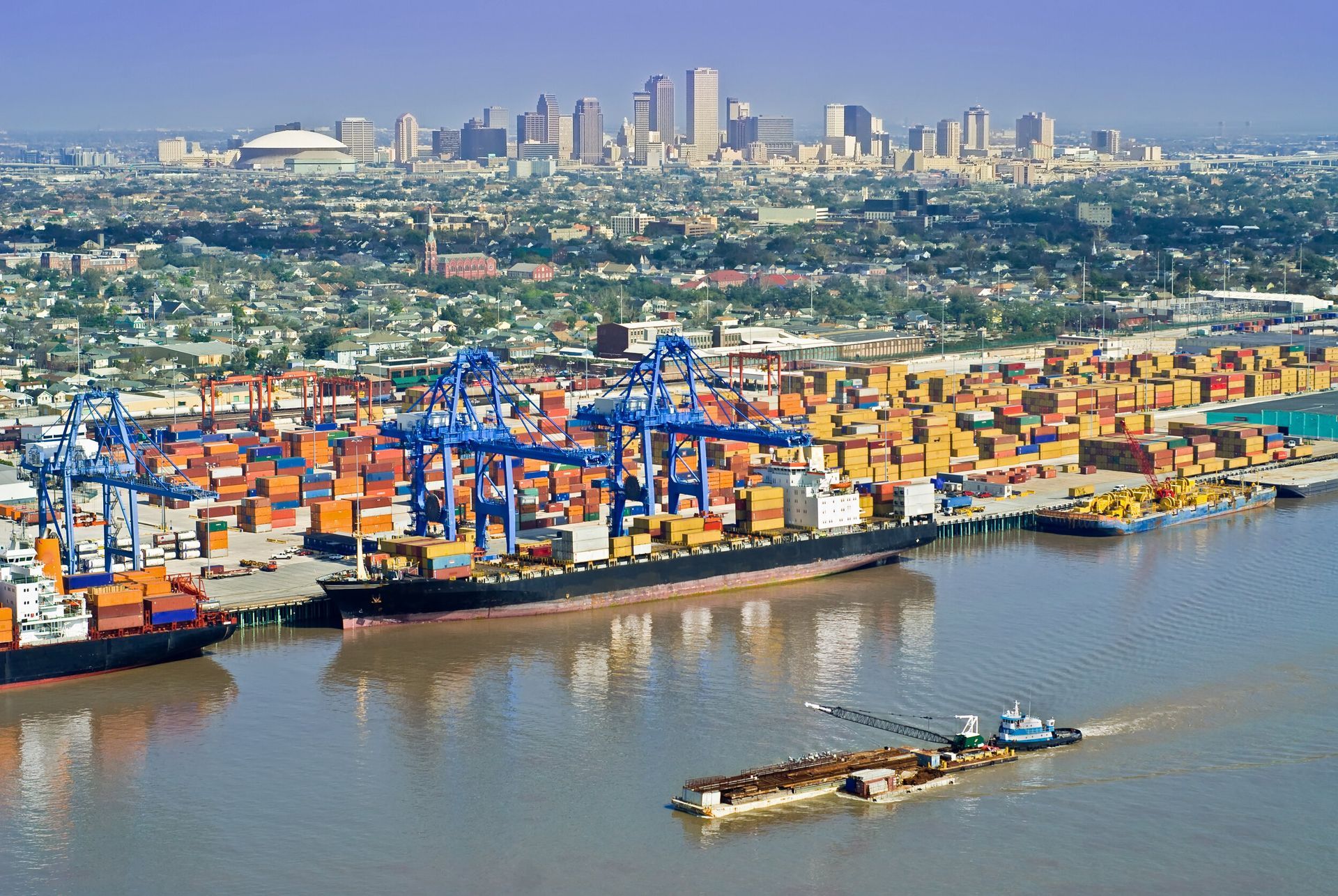
Download UNO Real Estate Market Analysis for New Orleans & Northshore Region for a deeper, data-driven breakdown of these trends. If you’re paying attention to industrial real estate in the Greater New Orleans region, you’re looking at a market that rewards patience, understanding and timing. On the surface, things feel flat. But in this market, flat doesn’t mean weak. It means stable, predictable and quietly setting up for what’s coming next. The fundamentals are intact. The demand base is consistent. And more importantly, there are real catalysts on the horizon that will shape the next decade of growth. A Flat Market That’s Doing Exactly What It Should The latest analysis from the University of New Orleans describes the industrial market as flat, and that’s accurate. Availability is sitting around 3.69 million square feet, right in line with historical averages. Leasing activity is steady. Absorption is consistent. This isn’t a market that spikes or crashes. It moves with purpose. A big reason for that stability is the type of tenant base we serve. This is a working industrial market tied heavily to maritime, logistics, petrochemical and agricultural operations. These aren’t trend-driven users. They’re infrastructure-driven businesses that don’t disappear when the broader economy shifts. That consistency is what keeps this market grounded. Rents Are Holding, and That Matters We’re not seeing major swings in rental rates, and that’s a good thing. Distribution space is still trading between $3.00 and $8.00 per square foot, with most deals clustering around the mid-$4 range. Service center space in key submarkets like Elmwood and along the River Parishes continues to command stronger numbers in the $8.00 to $10.00 range. Where things get interesting is newer product. There’s very little of it, and the market is responding accordingly. Modern industrial space is pushing into the $8.50 to $12.00 range, and in many cases, it’s justified. Most of our inventory is 30+ years old. So, when quality, well-located product hits the market, it stands out immediately. The Louisiana International Terminal Will Change the Conversation If you’re thinking long-term, this is the project to understand. The Louisiana International Terminal in St. Bernard Parish is a $1.8 billion investment that will fundamentally reshape how this region competes in global trade. Built on 1,100 acres in Violet, this is a true deep-draft, next-generation container facility backed by the Port of New Orleans and global operators. The timeline stretches from 2028 to 2031, but the impact starts well before that. You’re looking at tens of thousands of jobs, billions in economic output and, most relevant to us, a wave of industrial demand that will follow. Distribution users, logistics operators, service providers… they all come downstream of infrastructure like this. This is not speculative. This is inevitable. Infrastructure Is Quietly Being Put in Place Right Now At the same time, the state is making targeted investments through the FastSites program, and this is where I’d encourage clients to pay close attention. Four of those sites are right here in our region: Avondale Global Gateway (Jefferson Parish) Esperanza (St. Charles Parish) Naval Support Activity / Newlab (Orleans Parish) Gulf South Commerce Park (St. Tammany Parish) These aren’t just land plays. These are sites being actively prepared with infrastructure — roads, utilities, access — to attract real users. If you’re thinking about where the next wave of development lands, this is where you start. What’s Actually Available Today There are a couple of opportunities in the market right now that reflect where things are headed. The former Southern Glazer facility in St. Rose offers up to 240,000 square feet of modern distribution space with strong access to MSY and the interstate system. That kind of scale, with that location, doesn’t come available often. In Luling, we’re seeing something we haven’t seen in over 20 years: true speculative industrial development. The Luling Business Park is bringing new product online with flexibility, expansion potential and no build-to-suit delays. That matters for users who need to move now, not 12–18 months from now. How I’d Think About This Market Right Now This isn’t a market you chase. It’s one you position yourself within. If you’re a business owner, this is a window to secure the right facility before the next wave of demand tightens things up. If you’re an investor, this is about getting ahead of infrastructure-driven growth, not reacting to it after the fact. The New Orleans industrial market has always been relationship-driven, infrastructure-driven and long-cycle in nature. That hasn’t changed. What’s changing is the scale of what’s coming, and that’s where the opportunity sits. If you want to walk through how this applies to your business or your investment strategy, I’m happy to have that conversation. Bradley Cook, MS, CCIM Stirling bcook@stirlingprop.com
February 6, 2026
Curated for senior developers and long-term investors
January 29, 2026
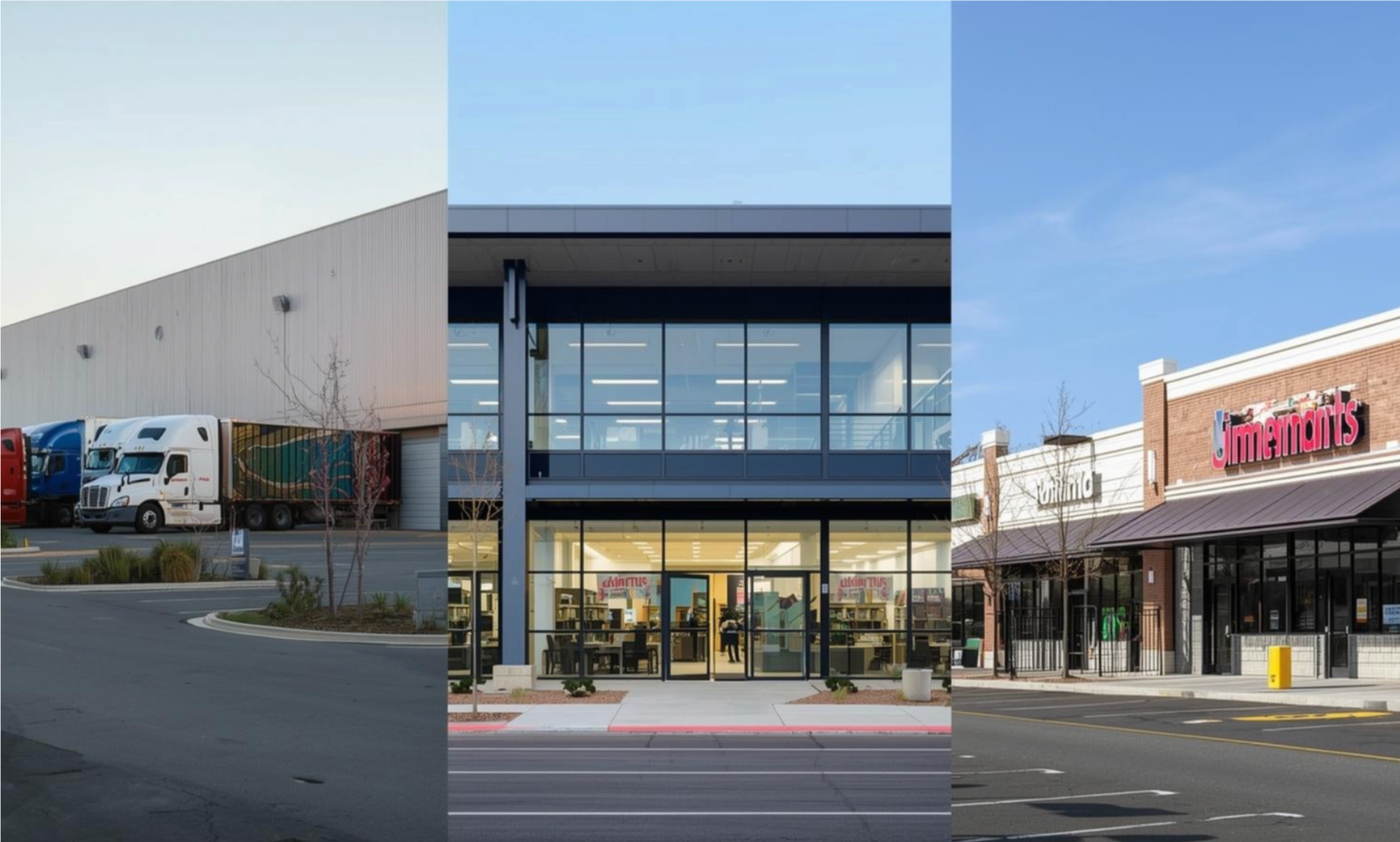
Curated for commercial investors comparing industrial, office and retail fundamentals

Show More