

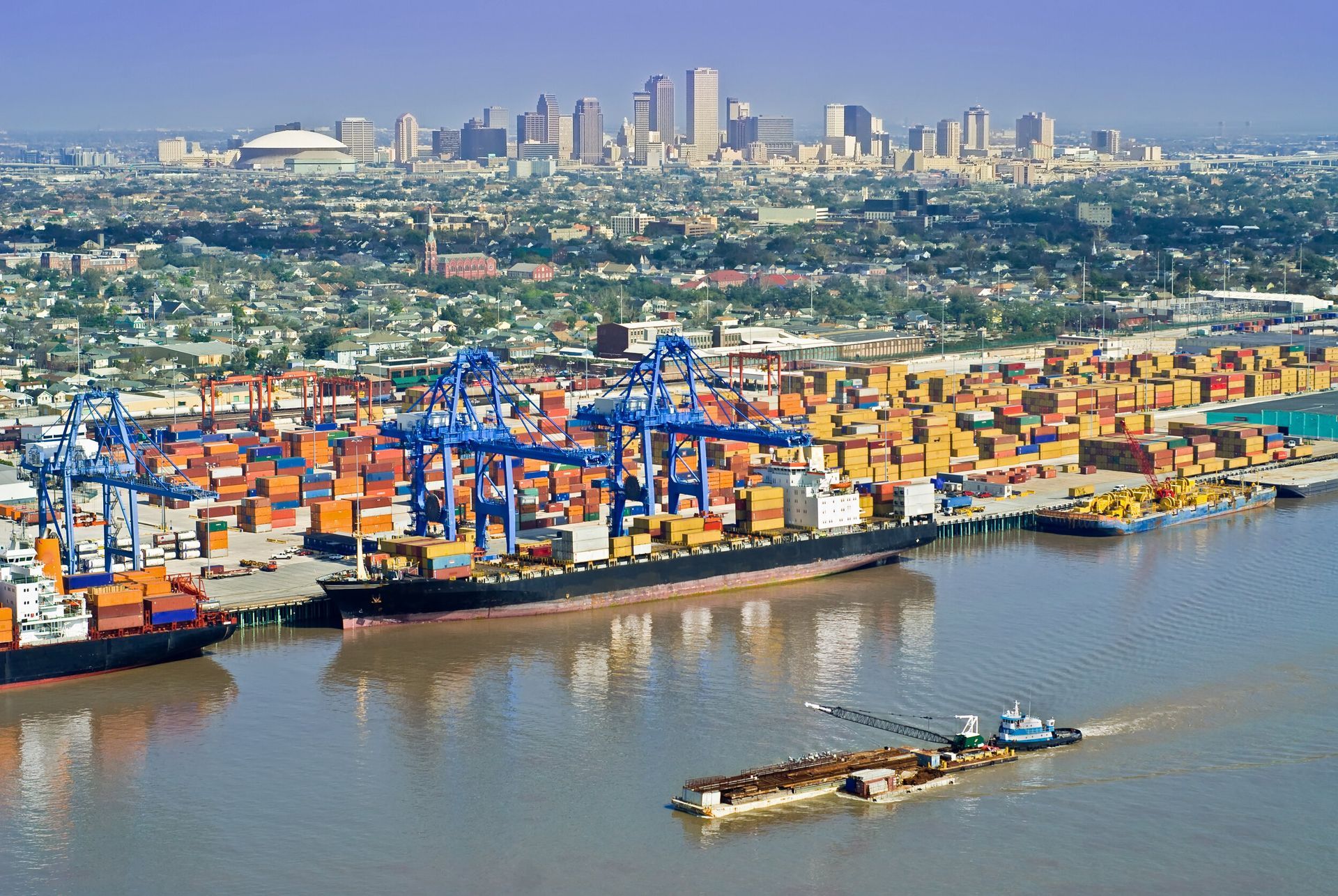
Curated for investors who recognize hidden market signals If you’re paying attention to industrial real estate in the Greater New Orleans region, you’re looking at a market that rewards patience, understanding and timing. On the surface, things feel flat. But in this market, flat doesn’t mean weak. It means stable, predictable and quietly setting up for what’s coming next. Download UNO Real Estate Market Analysis for New Orleans & Northshore Region for a deeper, data-driven breakdown of these trends. The fundamentals are intact. The demand base is consistent. And more importantly, there are real catalysts on the horizon that will shape the next decade of growth. A Flat Market That’s Doing Exactly What It Should The latest analysis from the University of New Orleans describes the industrial market as flat, and that’s accurate. Availability is sitting around 3.69 million square feet, right in line with historical averages. Leasing activity is steady. Absorption is consistent. This isn’t a market that spikes or crashes. It moves with purpose. A big reason for that stability is the type of tenant base we serve. This is a working industrial market tied heavily to maritime, logistics, petrochemical and agricultural operations. These aren’t trend-driven users. They’re infrastructure-driven businesses that don’t disappear when the broader economy shifts. That consistency is what keeps this market grounded. Rents Are Holding, and That Matters We’re not seeing major swings in rental rates, and that’s a good thing. Distribution space is still trading between $3.00 and $8.00 per square foot, with most deals clustering around the mid-$4 range. Service center space in key submarkets like Elmwood and along the River Parishes continues to command stronger numbers in the $8.00 to $10.00 range. Where things get interesting is newer product. There’s very little of it, and the market is responding accordingly. Modern industrial space is pushing into the $8.50 to $12.00 range, and in many cases, it’s justified. Most of our inventory is 30+ years old. So, when quality, well-located product hits the market, it stands out immediately. The Louisiana International Terminal Will Change the Conversation If you’re thinking long-term, this is the project to understand. The Louisiana International Terminal in St. Bernard Parish is a $1.8 billion investment that will fundamentally reshape how this region competes in global trade. Built on 1,100 acres in Violet, this is a true deep-draft, next-generation container facility backed by the Port of New Orleans and global operators. The timeline stretches from 2028 to 2031, but the impact starts well before that. You’re looking at tens of thousands of jobs, billions in economic output and, most relevant to us, a wave of industrial demand that will follow. Distribution users, logistics operators, service providers… they all come downstream of infrastructure like this. This is not speculative. This is inevitable. Infrastructure Is Quietly Being Put in Place Right Now At the same time, the state is making targeted investments through the FastSites program, and this is where I’d encourage clients to pay close attention. Four of those sites are right here in our region: Avondale Global Gateway (Jefferson Parish) Esperanza (St. Charles Parish) Naval Support Activity / Newlab (Orleans Parish) Gulf South Commerce Park (St. Tammany Parish) These aren’t just land plays. These are sites being actively prepared with infrastructure — roads, utilities, access — to attract real users. If you’re thinking about where the next wave of development lands, this is where you start. What’s Actually Available Today There are a couple of opportunities in the market right now that reflect where things are headed. The former Southern Glazer facility in St. Rose offers up to 240,000 square feet of modern distribution space with strong access to MSY and the interstate system. That kind of scale, with that location, doesn’t come available often. In Luling, we’re seeing something we haven’t seen in over 20 years: true speculative industrial development. The Luling Business Park is bringing new product online with flexibility, expansion potential and no build-to-suit delays. That matters for users who need to move now, not 12–18 months from now. How I’d Think About This Market Right Now This isn’t a market you chase. It’s one you position yourself within. If you’re a business owner, this is a window to secure the right facility before the next wave of demand tightens things up. If you’re an investor, this is about getting ahead of infrastructure-driven growth, not reacting to it after the fact. The New Orleans industrial market has always been relationship-driven, infrastructure-driven and long-cycle in nature. That hasn’t changed. What’s changing is the scale of what’s coming, and that’s where the opportunity sits. If you want to walk through how this applies to your business or your investment strategy, I’m happy to have that conversation. Bradley Cook, MS, CCIM Stirling bcook@stirlingprop.com
Curated for senior developers and long-term investors
Curated for commercial real estate investors who spot market shifts early