


Sale-Leasebacks: The Untapped Deal Structure Built for This Market

June 23, 2025

Curated for Developers, Investors and Landowners with Vision

If your business operates within the industrial property you own, and you haven’t explored a sale-leaseback, now may be the most advantageous time in years to do so.


With the availability of industrial spaces at record lows, and investor demand outpacing the supply of newly developed warehouses and logistics facilities, owner-occupants are often sitting on untapped capital without realizing it. The twist is that businesses don’t have to relocate or relinquish operational control to access that equity.


This is where the advantages of sale-leasebacks come into play. They are quickly becoming one of the smartest options for businesses to stay rooted and reinvest in growth. Yet, despite those advantages, sale-leasebacks remain underutilized and misunderstood in the Gulf South. Let’s change that.


What Exactly Is a Sale-Leaseback?


In the simplest terms, a sale-leaseback is when a business sells its property to an investor and then signs a long-term lease to remain in the building. You become the tenant, but you don’t have to relocate. You can actually maintain operational control.


Why Would a Company Do That?


Because it allows you to convert an illiquid asset into immediate cash, while maintaining business as usual. It’s like refinancing, but better because you’re not taking on debt. Instead, you’re freeing up capital that’s been trapped in walls, land and loading docks. You work directly with the investor to establish lease terms that align with your business needs, including a rental rate that works for you. As the leasehold tenant, you maintain operational control of the property. If long-term ownership remains important to you, you can also negotiate provisions such as a right of first refusal or even a future purchase option, allowing you the opportunity to reclaim ownership if your financial position evolves and repurchasing becomes a strategic fit.


The Industrial Market in New Orleans: A Rare Seller’s Moment


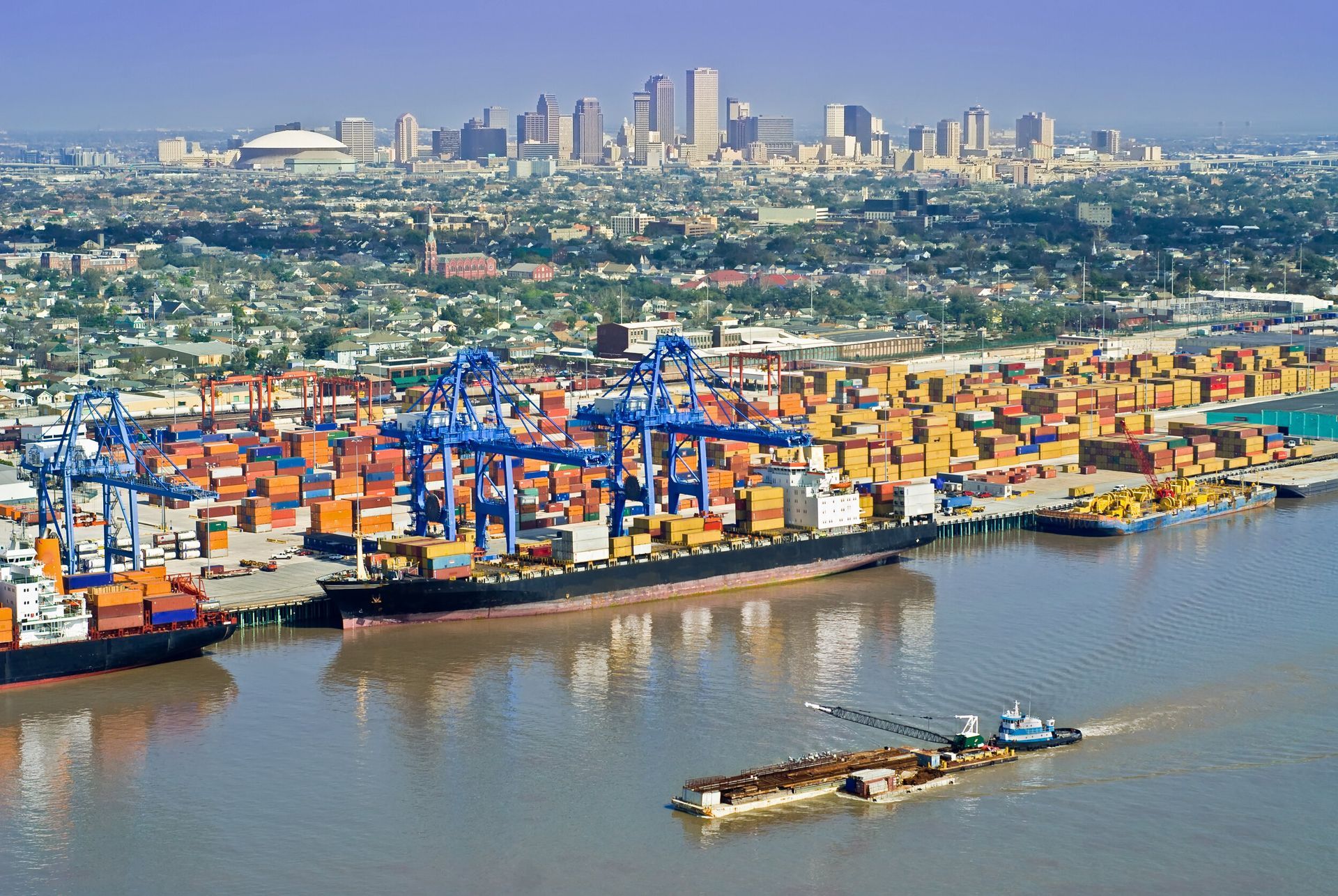
Southeast Louisiana’s industrial real estate market is experiencing one of its most competitive climates in recent history. Vacancy rates remain below 2.6% (Crexi, 2024) in many logistics and warehouse submarkets, while new constructionis constrained by rising costs and regulatory hurdles. At the same time, investor demand is exceptionally strong, particularly from buyers who seek stable, income-producing assets. Functional facilities  located near ports, rail lines and major interstates are especially scarce, further intensifying competition. As interest rates slowly come back down to more acceptable numbers and cap rates follow suit, property valuations continue to climb.


For owner-occupants, this creates a powerful advantage. You may be able to command a premium sale price while still remaining in your facility. And because investors increasingly prioritize long-term tenants with strong operational track records, your business becomes a key part of the asset’s value beyond the building itself.


Top 5 Reasons to Consider a Sale-Leaseback in 2025


1. Liquidity Without Loans

A sale-leaseback unlocks equity without incurring debt or increasing your liabilities. That capital can be reinvested in new equipment, staffing, R&D or facility upgrades.


2. Maximize Value While the Market’s Hot

You may never again see today’s prices and buyer competition. Sale-leasebacks let you monetize your property while investor demand is peaking.


3. Streamline Succession Planning

If you're approaching retirement or planning a business transition, a sale-leaseback can clean up your balance sheet and boost sale multiples.


4. Tax Advantages

Lease payments are often tax-deductible operating expenses, improving your after-tax cash flow compared to a mortgage.


5. Stay in Control

You don’t give up operations. You just shift from owner to tenant, often with the ability to negotiate renewal terms, building rights and more.

Who’s Doing This?


Sale-leasebacks aren’t just a strategy for public companies or private equity-backed firms. They are increasingly being used by a wide range of local and regional businesses. Family-owned manufacturers are leveraging them to grow without taking on new bank debt. Third-generation logistics companies are using sale-leasebacks to consolidate properties and streamline operations.


Local distribution businesses are reinvesting unlocked capital into their people, processes and infrastructure. Even owners preparing for a future sale are employing this strategy to boost earnings before interest, taxes, depreciation and amortization (EBITDA) and maximize their exit proceeds.

In every case, the trigger is the same: the need to unlock capital without sacrificing control is the driving cause.


FAQs: What Business Owners Want to Know


How long is the lease typically?

Usually 5 to 15 years depending on a number of negotiated factors, often with built-in renewal options and rent escalations. Terms are customized.


Can I sell and lease back a property with a mortgage?

Yes, proceeds from the sale can be used to pay off your loan. The rest is yours to reinvest or hold.


Will I still have control over the property?

Yes, you’ll operate as you do today. These deals often come with agreed-upon rights for maintenance, signage and improvements.


What’s the downside?

You’re no longer the property owner, so you lose long-term appreciation and control over resale. In exchange, you gain liquidity, tax advantages and flexibility.


What if I want to exit my business and avoid a long-term lease?

A sale-leaseback can be a smart way to unlock capital from your real estate now while you work through your exit strategy or succession plan.


Why Now? A Narrow Window of Opportunity


We’re not just in a seller’s market. We’re in a strategic seller’s market, and it may not last forever. Investors are pulling back from risky, ground-up development and zeroing in on properties with strong tenants already in place. With borrowing costs rising, leased industrial assets are far more attractive than vacant buildings or speculative builds. At the same time, institutional capital is flooding into logistics-heavy regions like New Orleans, driving competition and prices even higher.


Here’s the kicker: some owner-occupants are sitting on record-level equity without realizing it. Their buildings have appreciated dramatically, but they haven’t yet tapped into that hidden value.


Make no mistake, this opportunity has a shelf life. Interest rates remain volatile, insurance premiums are shifting and broader economic trends could cool buyer appetite. If you’ve been waiting for the right moment, this might be it. The smartest deals often come down to timing.


Final Take: This Isn’t Just About Selling Property. Future-Proof Your Business


Sale-leasebacks offer more than cash. They provide strategic flexibility, balance sheet optimization and the ability to stay competitive in a rapidly shifting economy. The most successful owner-occupants don’t just ask, “What’s this building worth?” They ask, “What can I do with the equity inside it?”


If you own an industrial facility and haven’t explored your sale-leaseback potential, now is the time. Before the market shifts. Before interest rates change again. Before your competitors beat you to it.

April 10, 2026
Download UNO Real Estate Market Analysis for New Orleans & Northshore Region for a deeper, data-driven breakdown of these trends. If you’re paying attention to industrial real estate in the Greater New Orleans region, you’re looking at a market that rewards patience, understanding and timing. On the surface, things feel flat. But in this market, flat doesn’t mean weak. It means stable, predictable and quietly setting up for what’s coming next. The fundamentals are intact. The demand base is consistent. And more importantly, there are real catalysts on the horizon that will shape the next decade of growth. A Flat Market That’s Doing Exactly What It Should The latest analysis from the University of New Orleans describes the industrial market as flat, and that’s accurate. Availability is sitting around 3.69 million square feet, right in line with historical averages. Leasing activity is steady. Absorption is consistent. This isn’t a market that spikes or crashes. It moves with purpose. A big reason for that stability is the type of tenant base we serve. This is a working industrial market tied heavily to maritime, logistics, petrochemical and agricultural operations. These aren’t trend-driven users. They’re infrastructure-driven businesses that don’t disappear when the broader economy shifts. That consistency is what keeps this market grounded. Rents Are Holding, and That Matters We’re not seeing major swings in rental rates, and that’s a good thing. Distribution space is still trading between $3.00 and $8.00 per square foot, with most deals clustering around the mid-$4 range. Service center space in key submarkets like Elmwood and along the River Parishes continues to command stronger numbers in the $8.00 to $10.00 range. Where things get interesting is newer product. There’s very little of it, and the market is responding accordingly. Modern industrial space is pushing into the $8.50 to $12.00 range, and in many cases, it’s justified. Most of our inventory is 30+ years old. So, when quality, well-located product hits the market, it stands out immediately. The Louisiana International Terminal Will Change the Conversation If you’re thinking long-term, this is the project to understand. The Louisiana International Terminal in St. Bernard Parish is a $1.8 billion investment that will fundamentally reshape how this region competes in global trade. Built on 1,100 acres in Violet, this is a true deep-draft, next-generation container facility backed by the Port of New Orleans and global operators. The timeline stretches from 2028 to 2031, but the impact starts well before that. You’re looking at tens of thousands of jobs, billions in economic output and, most relevant to us, a wave of industrial demand that will follow. Distribution users, logistics operators, service providers… they all come downstream of infrastructure like this. This is not speculative. This is inevitable. Infrastructure Is Quietly Being Put in Place Right Now At the same time, the state is making targeted investments through the FastSites program, and this is where I’d encourage clients to pay close attention. Four of those sites are right here in our region: Avondale Global Gateway (Jefferson Parish) Esperanza (St. Charles Parish) Naval Support Activity / Newlab (Orleans Parish) Gulf South Commerce Park (St. Tammany Parish) These aren’t just land plays. These are sites being actively prepared with infrastructure — roads, utilities, access — to attract real users. If you’re thinking about where the next wave of development lands, this is where you start. What’s Actually Available Today There are a couple of opportunities in the market right now that reflect where things are headed. The former Southern Glazer facility in St. Rose offers up to 240,000 square feet of modern distribution space with strong access to MSY and the interstate system. That kind of scale, with that location, doesn’t come available often. In Luling, we’re seeing something we haven’t seen in over 20 years: true speculative industrial development. The Luling Business Park is bringing new product online with flexibility, expansion potential and no build-to-suit delays. That matters for users who need to move now, not 12–18 months from now. How I’d Think About This Market Right Now This isn’t a market you chase. It’s one you position yourself within. If you’re a business owner, this is a window to secure the right facility before the next wave of demand tightens things up. If you’re an investor, this is about getting ahead of infrastructure-driven growth, not reacting to it after the fact. The New Orleans industrial market has always been relationship-driven, infrastructure-driven and long-cycle in nature. That hasn’t changed. What’s changing is the scale of what’s coming, and that’s where the opportunity sits. If you want to walk through how this applies to your business or your investment strategy, I’m happy to have that conversation. Bradley Cook, MS, CCIM Stirling bcook@stirlingprop.com
February 6, 2026
Curated for senior developers and long-term investors
January 29, 2026
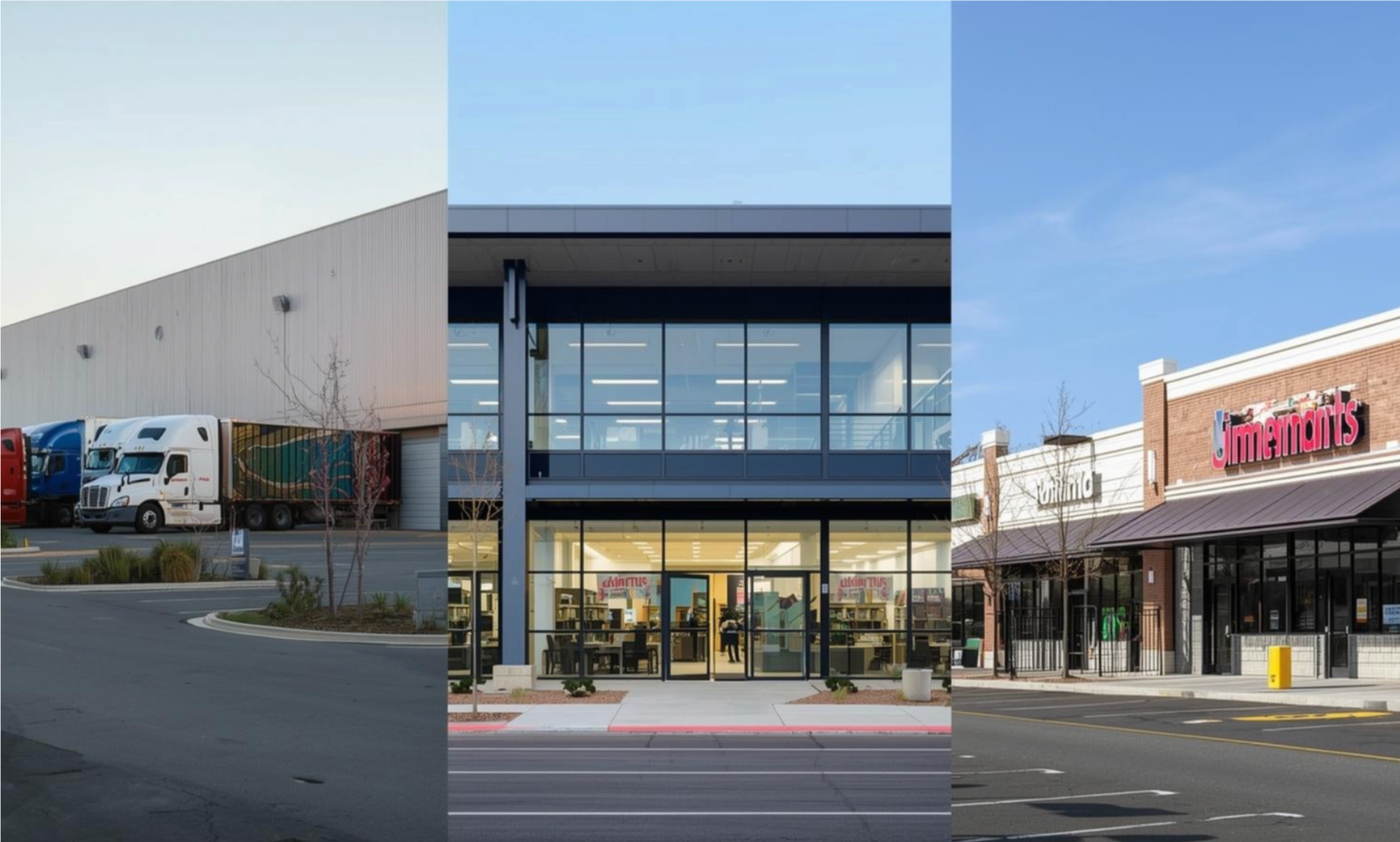
Curated for commercial investors comparing industrial, office and retail fundamentals

Show More